


Choosing professional lash adhesive starts with three questions: what is the room temperature, what is the humidity near your treatment area, and how long do you need for accurate placement? A familiar brand or a short setting time gives only part of the answer. The goal is a formula whose requirements fit your workspace and the pace you can maintain.
Measure the room rather than judging the weather
Use a thermo-hygrometer near the working area, following the device’s measurement instructions. Air conditioning, an open window and seasonal changes can affect the indoor environment. Record readings during the hours you see clients rather than relying on a single morning check. This helps reveal how consistent your workspace is throughout the day.
Compare those readings with the manufacturer’s ranges for the exact adhesive. There is no single temperature or humidity setting suitable for every formula. If the morning and evening readings differ, account for that variation when selecting a product instead of choosing from whichever reading looks most convenient.
Match setting time to your placement speed
A stated setting time belongs to the conditions specified for that product. With conventional extension adhesives, changes in temperature and humidity can affect curing speed. A formula another artist finds comfortable may therefore behave differently in your room, even when you both use the same extension technique.
If precise placement still takes you more time, choose a working window that suits your current skill rather than the shortest number on the label. Adhesive setting before placement is complete is a reason to review the match between formula, conditions and pace. As your skills develop, reassess the choice using your actual working experience.
Compare products using the same fields
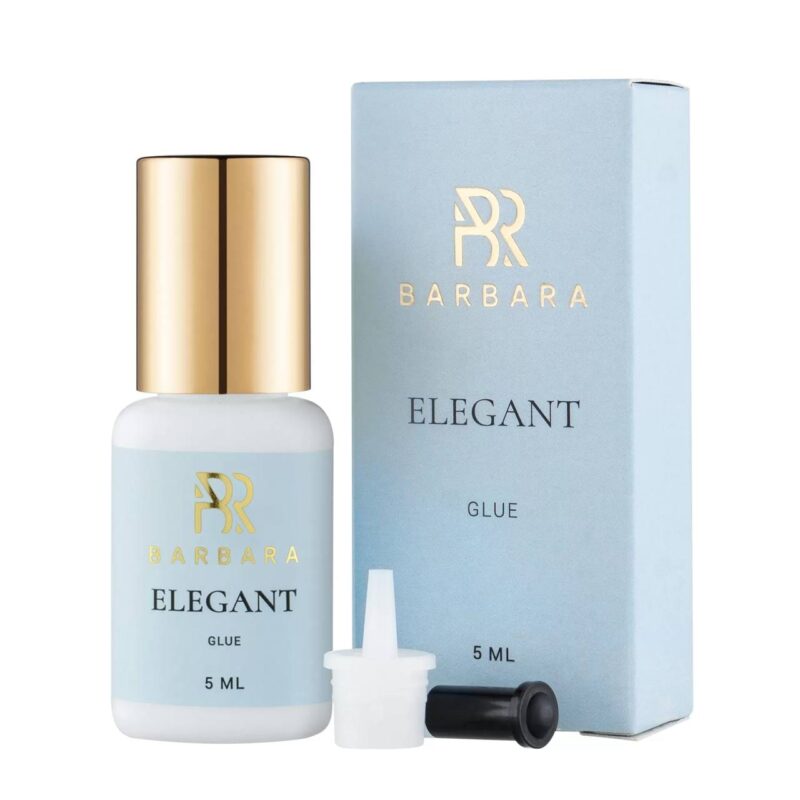
Open several options in the lash extension adhesive catalogue and note each product’s temperature range, humidity range, setting time, consistency, colour and size. If information is missing or unclear, ask for the manufacturer’s instructions. Do not assume every formula within one brand shares the same specifications.
Identify the working system as well. UV/LED adhesive requires compatible equipment and appropriate training; it is not an automatic substitute for conventional adhesive. This guide concerns professional purchasing criteria and does not provide lamp-use instructions or directions for self-application.
Check the bottle and supporting products
Review expiry, storage requirements, the opening date of your current bottle and a size that suits your appointment volume. Unopened shelf life and the permitted use period after opening are separate details. There is no universal replacement interval for every formula, and having adhesive left in a bottle does not establish whether it is still suitable for use.
When considering preparation and finishing products, check their purpose and compatibility. Primer, accelerator and bonder are not automatic answers to every attachment problem. Changing several products together also makes it harder to identify which change affected the behaviour you observed.
When a familiar adhesive behaves differently
Record what has changed: room readings, opening date, storage, placement pace or preparation products. Give the supplier the formula name and these details so the question can be addressed specifically. One change in performance is not enough to establish that a bottle is faulty or that a whole brand is unsuitable.
Before the next order, return to the three starting questions and review your wider eyelash extension equipment as part of the working environment. A well-matched choice is one you can explain through measurements, instructions and your own pace.