


Choose professional tweezers by the job they need to do. In eyelash extensions, separating a natural lash and holding an extension or fan are different tasks. Brow shaping has another purpose: gripping and removing an individual hair. Before comparing brands or finishes, decide which hand and stage of your work the new tool is for. A clear purpose makes product descriptions easier to compare and helps you avoid buying a familiar shape without checking its intended use.
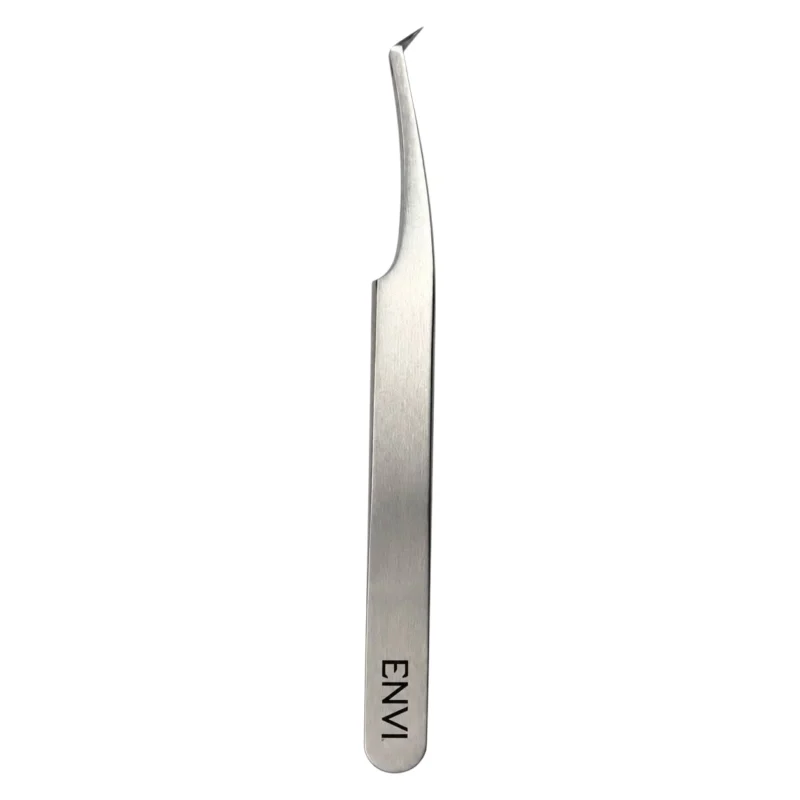
Separate isolation from extension handling
Isolation tweezers separate one natural lash from its neighbours while leaving access to the working area. Consider the tip shape alongside the view it gives you in your usual hand position. Straight, curved and dolphin shapes can suit different grips; a shape name alone does not confirm suitability for every technique. In the eyelash extension tweezers collection, begin with the model’s stated purpose.
The other hand holds an individual extension for classic application, or picks up and forms a fan for volume work. Here, check where the tips meet and whether the contact area suits the fan-making method you have learned. Two tools that look similar in a photograph may handle fibres differently. You do not need to assume one pair will perform both roles equally well. Set separate requirements for the two hands before choosing.
What tip geometry tells you
The angle and length of the working tip, together with the curve of the body, describe the tool. They do not create a universal quality ranking. An L-shaped tip offers a different approach from a straight one, but its usefulness also depends on wrist position, working surface and technique. Model names vary between manufacturers, so read the description and attributes instead of comparing a letter or number alone.
For example, ENVI Diamond Dolphin is listed for isolation. ENVI Diamond L45-5mm is listed for classic and volume work. These are examples of different stated uses, rather than a ranking or a single recommendation for every artist. A coating or series name also cannot replace checking tip alignment and suitability for your technique.
Brow tweezers need a suitable hair grip
For brow shaping, consider how the working surfaces meet and grip the selected hair. Slanted and straight tips offer different approaches to the brow line; the choice depends on the area and the artist’s grip. A pointed lash extension tool is not automatically a suitable substitute for a hair-removal tool. Compare purpose-made options in the brow tweezers collection. The word “professional” does not promise painless removal or the same skin response for every client.
Check handling and care before ordering
Weight, body length and arm resistance affect how tweezers feel. There is no single correct weight for everyone. When assessing a new tool, notice whether closing it takes unnecessary effort, whether the tip blocks your view and whether you must change your usual wrist position. If ordering remotely, clarify any missing purpose or specification details first. A product photograph cannot demonstrate closing pressure.
Also read the manufacturer’s cleaning, disinfection and permitted processing instructions for the exact tool and coating. Colour alone does not establish compatibility with a solution or device. Protect the tips in storage and inspect them after a drop. A tool whose tips no longer meet correctly needs assessment before returning to service.
- Define the task: isolation, classic, volume or brows.
- Compare intended use, geometry and contact area.
- Check grip comfort and permitted care methods.
- Choose for your technique and working hand.